


December 31, 2025 | Articles
Abdullah Alnabhan Joins Hill International as Managing Director, Middle East

With the passing of the Infrastructure Investment and Jobs Act (IIJA), the U.S. construction industry has faced increased demand for engineering and construction services. Due to the scarcity of bidders, some contractors have been able to transfer schedule risks to owners. In response, owners may prefer to use alternative delivery (AD) procurement methods as a way to return some schedule risk to contractors. However, AD procurement is not a silver bullet for eliminating schedule risk.
Most AD procurements require fast-tracked schedules. For example, I formerly worked on an AD rail megaproject with an extremely aggressive schedule. On that project, the contractor planned to produce shop drawings and issue pre-final (90%) submittals for owner approval simultaneously. When the owner did not approve the pre-final submittal, the impact on the baseline schedule was hard to mitigate.
This is generally true of any fast-tracked project. Any resubmittals of design packages or permit applications will impact the schedule, contributing to delays and cost overruns that the owner will eventually share—even if the contact language is clear that the contractor is responsible! Plus, on projects with fast-tracked schedules, owner-requested scope changes after contract award are likely to contribute to additional delays and cost overruns.
These are just some examples of schedule risks on AD projects. So, how can project teams mitigate them?
There is not a single solution to mitigating schedule risk, and different types of AD procurement are associated with different risks. In my experience, however, a spirit of partnership can help achieve better schedule risk management and better outcomes on any project. When delays happen, all parties should wear their “project hats” vs. their own hats. They should work together as one team with one goal rather than exchange letters pointing fingers at one another. More specific tactics include:
By sharing scheduling risks on projects procured via AD procurement methods, cultivating partnership on their project teams, and leveraging the tactics listed above, owners can reduce the risk of schedule delays, avoid the need for enforcing liquidated damages, and deliver our crucial infrastructure projects on time and within budget.
About the Author
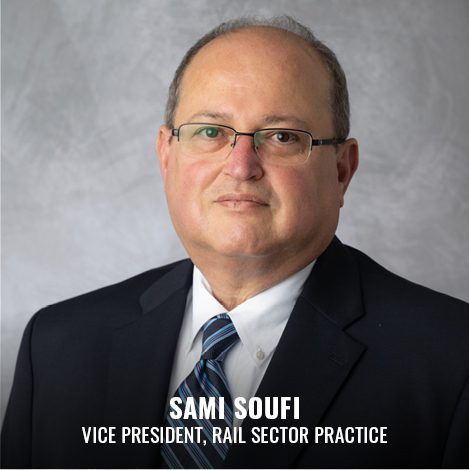
Vice President Sami Soufi is an award-winning program executive with more than 30 years of experience leading the delivery of rail and transit megaprojects, including the $6 billion MTA Purple Line Rail Extension in Riverdale, MD, the $3 billion WMATA Silver Line Rail Extension in Washington, DC, and the $13 billion Riyadh Metro in Riyadh, Saudi Arabia. Sami holds a Master of Science in Construction Engineering and Management from the University of Maryland, College Park; a Master of Engineering in Structural Engineering from McGill University; and a Bachelor of Science in Civil Engineering from Middle East Technical University. He is a registered Professional Engineer in Maryland and Virginia. To speak with Sami about your own transit project needs, contact him via email at [email protected].
Share
December 31, 2025 | Articles
Abdullah Alnabhan Joins Hill International as Managing Director, Middle East

December 15, 2025 | Articles
Progressive Design-Build Powers Poulsbo’s New Fire Station 76

December 8, 2025 | Articles

December 4, 2025 | Articles
Hill International Helps Deliver National Museum in Abu Dhabi

November 16, 2025 | Articles
Making Connections in San Jose: VTA’s Eastridge to BART Regional Connector

November 12, 2025 | Articles

November 3, 2025 | Articles
Hill International to Support High-Efficiency Gas Cogeneration Projects in Bucharest

October 12, 2025 | Articles
An Interview With Pakistan Country Manager Syeda Fakhar-un-Nisa

October 5, 2025 | Articles
More Than a Park: The Latest Updates on PennDOT’s I-95 CAP Project in Philadelphia

